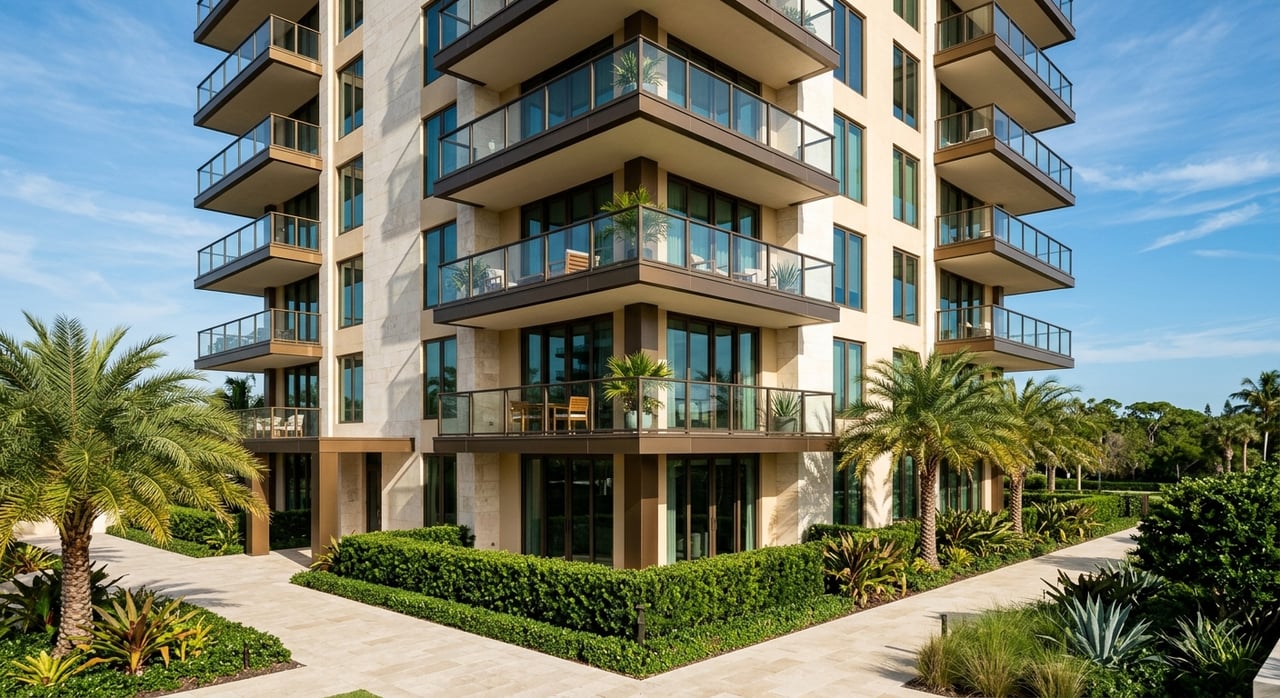
Longboat Key Condo Fees: What Smart Buyers Review
May 14, 2026
May 14, 2026
Wondering why one Longboat Key condo has a monthly fee that seems manageable while another feels surprisingly high? If you are shopping for a condo or villa on the island, that number can affect your budget just as much as your mortgage, insurance, and taxes. The good news is that once you understand what HOA and condo fees actually pay for, it becomes much easier to compare communities with confidence. Let’s dive in.
In Florida, condo fees are usually called regular assessments. These are each owner’s share of the community’s common expenses, tied to a form of ownership where each unit also has an undivided share in the common elements.
In an HOA, the charges may be called assessments or amenity fees. Florida law allows those costs to be payable to the association, a developer, or the owner of common areas or recreation facilities, and unpaid amounts can become liens.
That matters on Longboat Key because not every community is structured the same way. Two properties may both look appealing online, but one may operate as a condominium and another under an HOA framework, which can change how costs are allocated and what documents you need to review.
HOA governing documents must explain how shared expenses are divided among members. Florida law also allows those shares to vary among different parcel classes based on factors like service level or development stage.
For you as a buyer, that means the fee is not just a flat number to accept at face value. You want to know why the amount is what it is and whether the allocation method makes sense for that specific community.
Most condo budgets in Florida include both operating expenses and reserve expenses. Operating costs commonly include management fees, utilities, taxes, insurance, accounting, and legal services.
If a community has recreational amenities, those charges should be shown separately in the budget. That is helpful because it lets you see whether you are paying mainly for daily operations, lifestyle amenities, long-term repairs, or a mix of all three.
Your monthly fee may help cover items such as:
Some communities include more services than others. A higher monthly fee may reflect more included services, not necessarily overspending.
Reserve accounts are meant for capital repairs and deferred maintenance. Florida guidance specifically points to items like roof replacement, building painting, and pavement resurfacing, along with other major components above the reserve threshold.
Reserve funds are important because they help a community prepare for large future expenses. In many cases, a fee that looks lower today may simply mean the association is setting aside less for future repairs.
Longboat Key is not a typical mainland market. The town is a barrier island between the Gulf of Mexico and Sarasota Bay, and the town states that this location creates added building-code development standards that do not apply the same way on the mainland.
That coastal setting can influence maintenance needs, insurance costs, and long-term repair planning. It is one reason island communities can have fee structures that differ from what you may have seen elsewhere in Florida.
Florida now requires a Structural Integrity Reserve Study, or SIRS, at least every 10 years for condominium buildings that are three habitable stories or higher. The study covers major components such as the roof, structural systems, fireproofing and fire-protection systems, plumbing, electrical systems, waterproofing and exterior painting, windows, and exterior doors.
For budgets adopted on or after December 31, 2024, owner-controlled condo associations that must obtain a SIRS may not vote to provide no reserves or reduced reserves for those required items. In practical terms, reserve funding has become a major factor in monthly condo fees, especially in coastal buildings.
Condo associations must maintain adequate property insurance and may also carry flood insurance. The master policy generally covers the association’s property and common elements, but many interior finishes and personal property remain the unit owner’s responsibility.
Florida law also allows boards to set insurance deductibles based on available funds and assessment authority. That means a lower monthly fee may come with a higher deductible, and property-loss deductibles or uninsured damage may become common expenses.
It is easy to assume the lowest monthly fee is the best deal. On Longboat Key, that can be a costly mistake.
A lower fee may mean fewer services, smaller reserve contributions, a larger insurance deductible, or all three. It can also increase the chance that owners may face special assessments later if major work is needed and the association has not set aside enough funds.
Under Florida law, a special assessment is any assessment other than the annual budget assessment. For buyers, that means the true cost of ownership is not just the monthly number you see in a listing.
You also want to know whether repairs are pending, reserves appear short, or insurance exposure could lead to future costs. In coastal condo communities, those details can have a real impact on your annual carrying costs.
If you are considering a Longboat Key condo, review the community documents before you get too far down the path. Florida resale buyers are entitled to key records that can help you understand both current fees and possible future obligations.
Important documents include:
The association’s official records should also include current insurance policies, management agreements, accounting records, meeting minutes, contracts, bids, inspection reports, and building permits. These records can show whether the fee is mainly supporting day-to-day operations, future repairs, or both.
Meeting minutes and inspection-related records can be especially useful because they may reveal discussion of upcoming projects before the impact is obvious from the monthly fee alone.
The best way to compare communities is to look at them apples to apples. Fee comparisons only help when you also know what is included, how reserve funding is handled, and whether big projects are already planned.
Here is a simple comparison framework:
| What to Compare | Why It Matters |
|---|---|
| What the fee includes | Shows whether you are paying for basic operations only or additional services and amenities |
| Reserve contributions | Helps you see how much is being saved for future capital repairs |
| Current SIRS status | Shows whether required structural reserve planning is current |
| Insurance deductible | A lower fee may be offset by higher owner risk if the deductible is large |
| Pending or recent special assessments | Helps reveal costs not obvious from the monthly fee |
| Separate transfer or resale fees | Shows whether you will owe additional amounts at closing |
A condo with a higher monthly fee may actually be the more predictable choice if reserves are stronger and major projects are already planned for in the budget. A lower-fee building may look attractive at first glance but require more careful review.
When you tour or review a Longboat Key property, ask direct questions early. Clear answers can help you avoid surprises and narrow your choices faster.
Ask questions like these:
If you are buying from out of state or comparing several island communities at once, having a local advisor help organize these answers can save time and reduce uncertainty.
Longboat Key spans both Manatee and Sarasota counties and has a barrier-island setting that can make community comparisons more nuanced than they first appear. Two similar-looking properties can have very different financial structures once you dig into reserves, insurance, inspections, and assessment history.
That is where experienced local guidance matters. When you understand not just the fee, but also what stands behind it, you can make a more informed and more comfortable buying decision.
If you are weighing condo options on Longboat Key and want help comparing fees, budgets, and community documents, connect with Lori Madden for personalized Sarasota-area guidance.
Stay up to date on the latest real estate trends.





Rely on decades of experience, local expertise, and dedicated service to make your next move seamless and successful.

LORI MADDEN
ADDRESS 100 WALLACE AVE STE 100 SARASOTA FL 34237