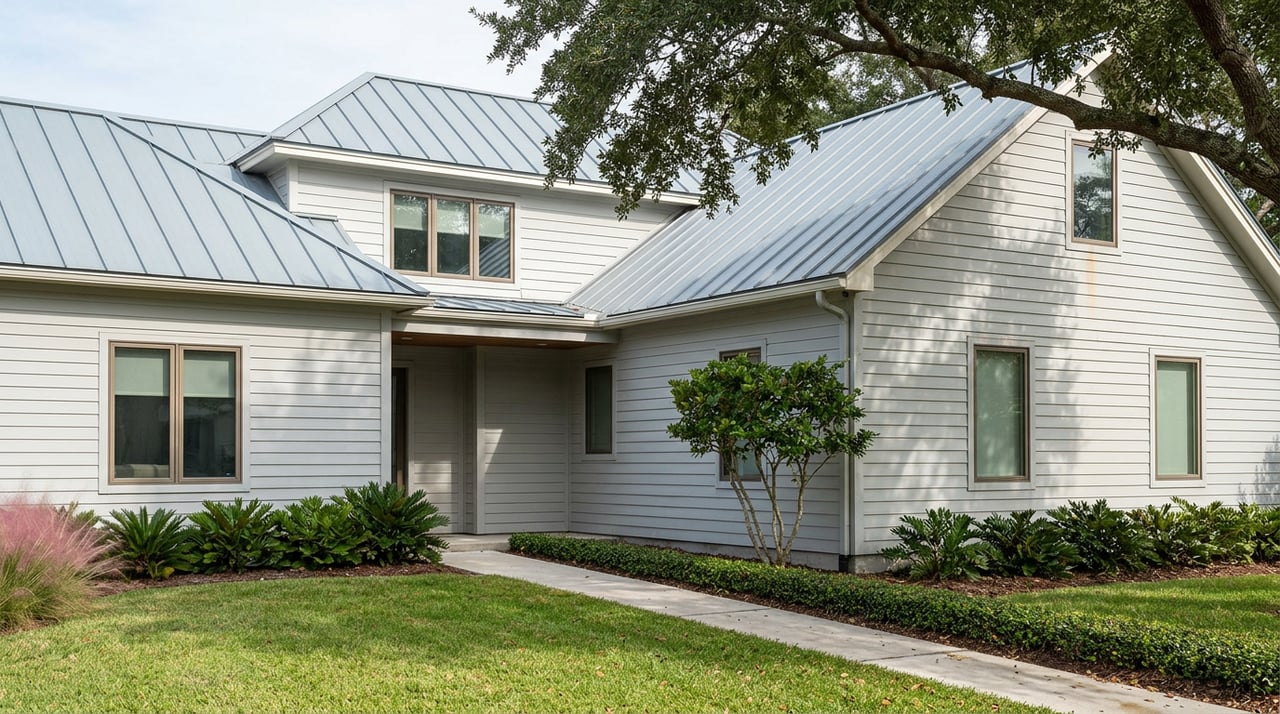
Same Price, Different Zip: The Sarasota Insurance Gap Buyers Don't See Coming
August 20, 2026
August 20, 2026
Why did the buyer down the street get a homeowners insurance quote for half of what you're being quoted, on a house that costs about the same?
That question comes up more than almost any other once a Sarasota contract gets to the insurance shopping stage, and it usually catches relocation buyers off guard. They have already done the homework on price. Sarasota's median sale price sat at $588,000 over the three months ending June 2026, according to Redfin's tracking, up 6.9 percent from the same period a year earlier, with homes taking around 75 days to sell. That number gets repeated on every portal search and every market recap. What almost nobody quotes is the number that actually determines your monthly payment once you own the place: the insurance premium, and it can swing by thousands of dollars a year between two homes that sold for the exact same price.
A $500,000 house a mile inland and a $500,000 house near the water are not the same financial commitment, even before you touch the mortgage. Distance to the coast alone can move a premium by 30 to 40 percent, and roof age and construction era do the rest. Put those together and you get a real spread across Sarasota's own market, not a national average pulled from a state you've never lived in.
Here's roughly how that spread breaks down for a $500,000 single-family home carrying standard dwelling coverage:
| Location type | Typical annual premium |
|---|---|
| Inland Manatee, inland Charlotte, newer Lakewood Ranch construction, North Port | $3,500 to $4,500 |
| Sarasota proper, Bradenton, Venice, inland Punta Gorda | $4,500 to $6,500 |
| Barrier islands (Siesta Key, Longboat Key, Lido Key), coastal Pinellas, older homes near water | $6,500 to $9,500 |
That's not a rounding error. That's a $3,000 to $6,000 annual gap on identical purchase prices, and it's the reason a national mortgage calculator will underestimate what you'll actually owe every month if you plug in a Florida address without adjusting for it.
The gap isn't random. Three factors do almost all of the work, and every one of them is checkable before you write an offer.
Distance to the coast. This is the single biggest lever. A home one mile inland typically costs 30 to 40 percent less to insure than a coastal-frontage property with a similar footprint. That's why mainland Sarasota neighborhoods like Gulf Gate, South Gate, Sarasota Springs, and Bee Ridge routinely price lower on insurance than comparable square footage closer to the water, even when the sale price lands in the same range.
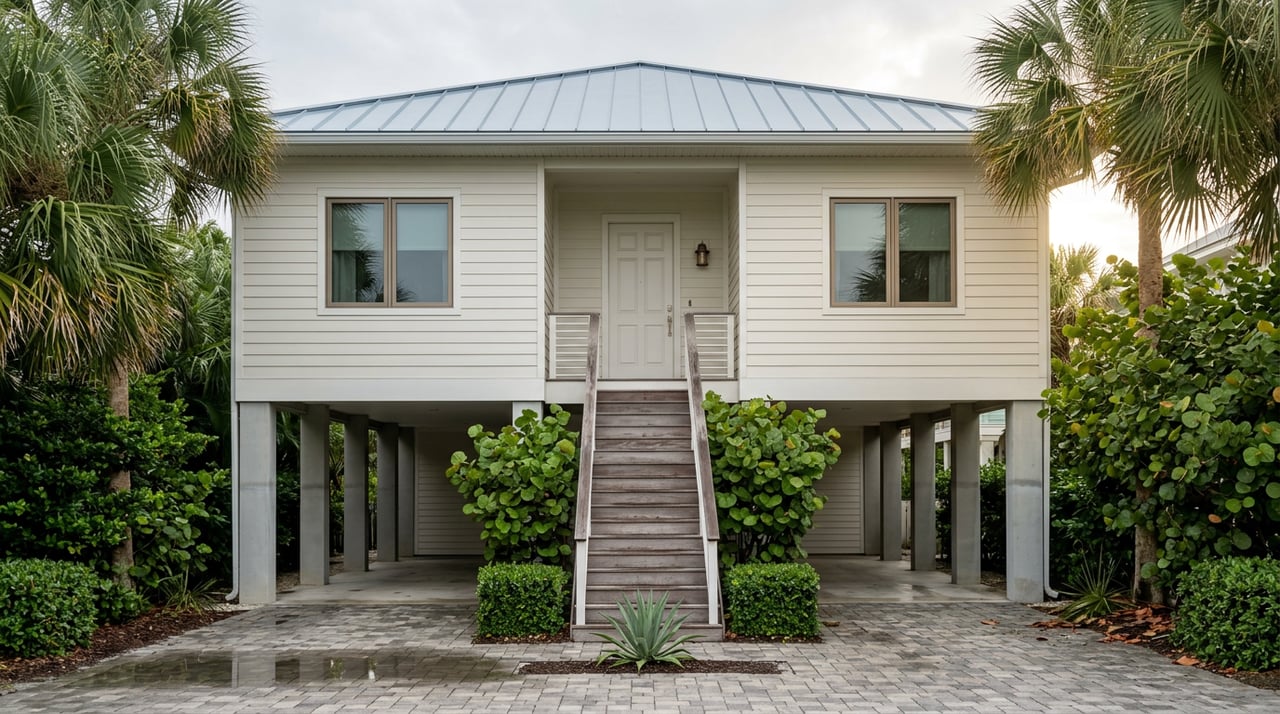
Roof age. Insurers treat roofs over 15 years old as a serious liability, and many private carriers won't write a policy at all past that point without significant upgrades. The bigger surprise for buyers is the 10-year mark, where rates can jump by more than half compared to a newer roof with equivalent coverage. A roof inspection isn't a formality in this market. It's a pricing threshold.
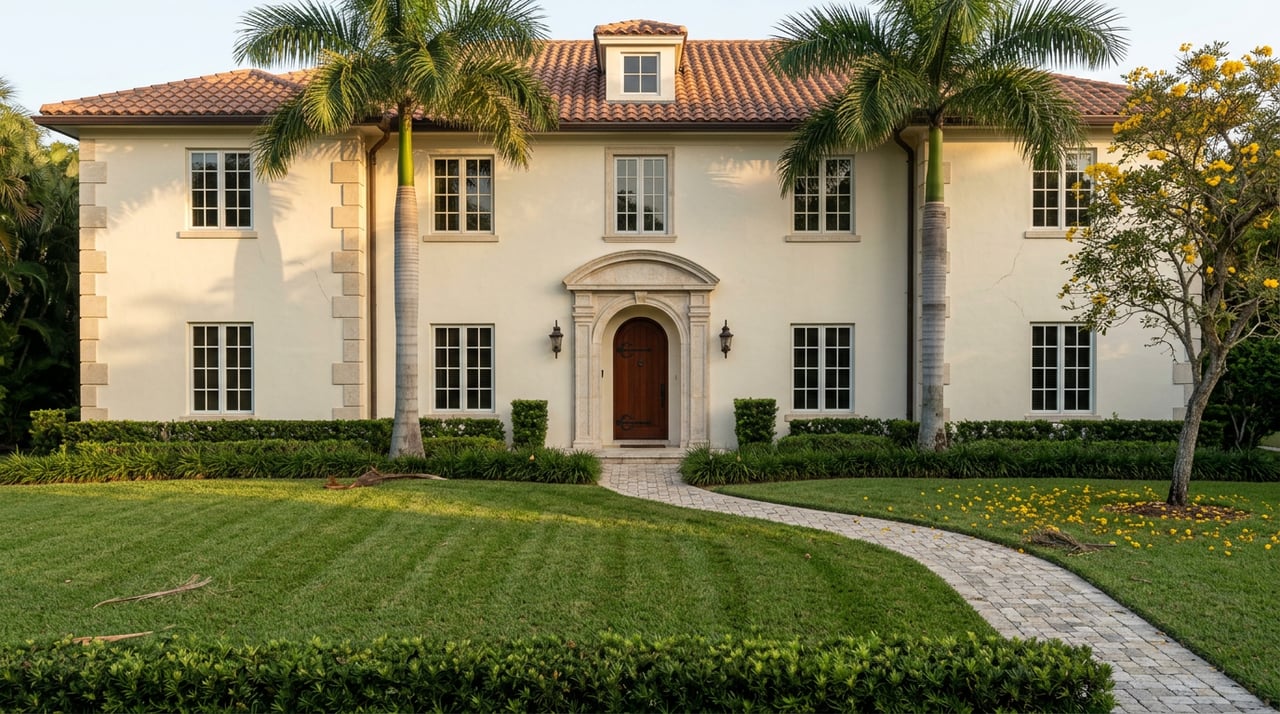
Construction era and documentation. Florida tightened its building code in 2001, requiring features like hip roofs and impact-resistant openings that measurably reduce storm damage. Homes built or substantially renovated after that code took effect tend to price lower, but only if that's documented. A home can have every qualifying feature and still get quoted at the higher rate if nobody has ever filed the paperwork proving it.
That third point is where most buyers leave money on the table, and it's also the cheapest problem on this list to fix.
A wind mitigation inspection is a short, standardized evaluation, usually 30 to 45 minutes, that documents a home's roof shape, roof-to-wall attachment, and window and door protection on a state form (OIR-B1-1802). In the Sarasota and Bradenton area, a standalone inspection typically runs $75 to $150, and the report stays valid for five years unless the roof, windows, or doors change.
The payoff is real. Most Florida homeowners who complete the inspection see the wind portion of their premium drop 15 to 45 percent, typically $500 to $2,500 or more a year, and inspectors working the Sarasota and Bradenton area report some homeowners saving as much as 60 percent on that portion of the bill. On a $500,000 home already priced at $5,000 or $6,000 a year, that's not a rounding error either. It's the difference between an insurance line that fits your budget and one that quietly wrecks it three months after closing.
The catch: an inspection you order yourself, during your due diligence period, is worth more than a seller's old paperwork. Features have to be current and fully compliant to count, and a single non-compliant window can knock a home out of an entire discount category even if everything else qualifies.
If you shopped for Florida insurance in 2022 or 2023 and walked away discouraged, it's worth looking again. Citizens Property Insurance Corporation, the state's insurer of last resort, started 2026 with about 395,000 policies statewide, down from more than 936,000 a year earlier, according to Florida Realtors' reporting on state data. That drop reflects a deliberate depopulation push, with more than a dozen new carriers approved to write property insurance in Florida since 2022 reforms took effect. More competition among carriers generally means more quotes worth comparing, not just one default number from the insurer of last resort.
There's also a smaller, concrete piece of good news specific to this year. The Florida Insurance Guaranty Association voted in February 2026 to end a 1 percent emergency assessment two years ahead of schedule, an estimated $650 million in savings for Florida policyholders through September 2028. None of this makes Florida a cheap state to insure a home in. It does mean the market a Sarasota buyer is shopping in this year has more real options than it did three years ago, and shopping around actually produces different quotes now in a way it didn't during the tightest years of the crisis.
Does a newer roof always mean a lower quote? Usually, but not automatically. The savings depend on documentation. A newer roof that's never been through a wind mitigation inspection can still get quoted at a higher rate than one that has the paperwork on file.
Is the Sarasota insurance market actually getting better, or does it just feel that way? The policy numbers back it up. Citizens' statewide count fell by more than 540,000 policies in 2025 alone, and new carriers have entered the market since. That's a measurable shift, not just sentiment.
Can I get real insurance numbers before I'm under contract? Yes, and you should. A wind mitigation inspection and a few independent quotes during your showing phase, not after your offer is accepted, gives you a real number to weigh against the sale price instead of a guess.
The sale price gets all the attention because it's the number everyone can compare in five seconds on a phone. The insurance line takes an afternoon of quotes and one short inspection to pin down, which is exactly why most buyers skip it until underwriting forces the issue. Skipping it doesn't make the number smaller. It just moves the surprise to a worse moment.
If you're comparing Sarasota neighborhoods and want the insurance math run alongside the sale price before you tour anything, Lori Madden at Sarasota Home Pro can walk through both numbers together and connect you with local resources who know this market's carriers, roofs, and code eras cold. Schedule your personalized Sarasota market consultation before you fall for a listing that doesn't fit your real monthly number.
Stay up to date on the latest real estate trends.
Rely on decades of experience, local expertise, and dedicated service to make your next move seamless and successful.

LORI MADDEN
ADDRESS 100 WALLACE AVE STE 100 SARASOTA FL 34237