Longboat Key Condo Remodel Rules Before You Renovate
July 9, 2026
July 9, 2026
Thinking about updating a Longboat Key condo? A simple kitchen refresh can turn into a much bigger process once association rules, town permits, contractor requirements, and building timelines come into play. If you are buying, selling, or planning a second-home upgrade, it helps to know what can slow a remodel and what questions to ask early. Let’s dive in.
On Longboat Key, your condo association is often the first checkpoint, not the town. Florida law gives condominium associations authority over the condominium and its common elements, and if a project involves a material alteration or substantial addition to common elements, the declaration controls. If the governing documents are silent, approval from 75% of the total voting interests may be required before work begins.
That means you should read the declaration, bylaws, rules, and any architectural review requirements before you commit to a renovation plan. If you are buying with the intent to remodel, this review should happen before your offer is finalized whenever possible. A layout idea that seems straightforward can be delayed, revised, or rejected if it conflicts with association rules.
Longboat Key also requires a Condominium Association Authorization form when a permit is filed for a unit in an association. The form must be signed by a board officer and notarized. In practical terms, that adds another approval step before the permit package is complete.
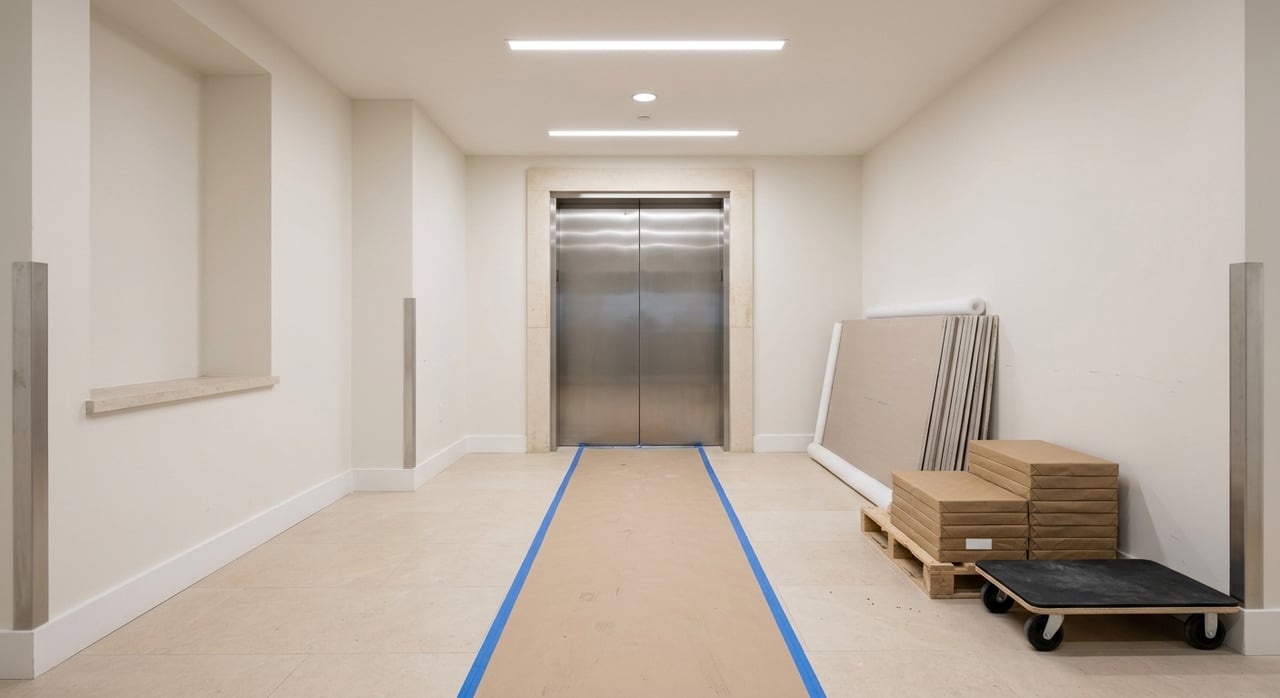
Many condo remodel details fall outside town code and inside association control. Things like elevator reservations, loading windows, hallway protection, parking, trash handling, and contractor access are often set by the building, not the municipality. That is why written association rules matter just as much as your contractor’s scope of work.
Before opening walls or ordering materials, ask for the association’s current renovation guidelines in writing. You want to know whether board approval is required before the permit is filed, what insurance certificates contractors must provide, and what quiet-hour or move-in rules apply. Those answers can shape both your budget and your timeline.
Most condo remodels on Longboat Key need permits. The town requires permits for most construction, enlargement, alteration, repair, removal, conversion, or replacement work involving building systems as well as mechanical, electrical, and plumbing work. Some minor work may be exempt, but that exemption may not apply if the work is part of a larger project or if flood-related rules affect the property.
Longboat Key uses the Accela permitting system, and incomplete applications are returned instead of processed. That means missing documents do not simply slow the file down. They can send you back to the start of the review process.
The town’s residential alteration checklist shows how detailed the package can be. A complete PDF plan set, correct file naming, and all supporting documentation are required before an application is considered complete. If your project includes exterior components or flood-related conditions, additional documentation may be required.
In multi-family condo buildings, owners generally should not expect to pull permits themselves. Longboat Key says condo work must be done by a licensed and insured contractor, and contractors must be registered with the Building Division. This is especially important for seasonal owners who may be trying to coordinate work from out of town.
For buyers, this is a key reality check. If your plan is to purchase an older unit and manage a quick remodel after closing, make sure you understand that licensed contractor availability and permit registration are part of the timeline. It is rarely as simple as closing one week and starting demolition the next.
Longboat Key does not impose a separate contractor-hour limit, but the town’s noise ordinance still affects how work gets done. Disturbing noises are prohibited before 8 a.m. and after 5 p.m. every day. Even if a contractor wants to extend the workday, that does not mean the building or town rules will allow it.
Inspections also require planning. Inspection requests must be submitted by 3 p.m. the day before, are handled first come, first served, and are not performed on weekends or designated holidays. Only registered contractors can schedule inspections online.
These rules can create gaps between work stages. If framing, electrical, or plumbing inspections are not scheduled in time, your project may sit idle while crews wait for the next approval step. That is one reason condo remodels often take longer than owners expect.
Longboat Key notes that a permit can be revoked after six months with no inspections or contractor contact. For seasonal owners, that is a serious issue. If you leave for part of the year and assume the contractor will wrap everything up later, a stalled project could create added cost and delays.
A smart habit is to make final inspection and permit closeout part of your payment planning. Before paying the contractor in full, confirm that the job is on track to reach final inspection and close properly. That extra step can help you avoid unfinished paperwork on a completed-looking project.
If you are considering an older Longboat Key condo, remodeling decisions should be tied to the building’s broader condition. Florida’s milestone inspection law applies to condominium and cooperative buildings that are at least three habitable stories high. The usual trigger is 30 years from the certificate of occupancy, though local enforcement may require the first inspection at 25 years in coastal conditions.
Longboat Key states that qualifying buildings must submit milestone reports to the Building Official, and those reports must be prepared by a Florida-licensed engineer or architect. A milestone inspection is a structural review, not a general code-compliance or fire-safety inspection. If phase one finds substantial structural deterioration, phase two testing may be required.
For you as a buyer or owner, that matters because building-wide findings can affect timing, budget priorities, and future assessments. A beautiful interior renovation may not be the first financial priority if the association is dealing with larger structural repair needs.
Separate from milestone inspections, certain residential condominium associations must complete a structural integrity reserve study at least every 10 years for buildings three habitable stories or higher. The study must address major components including the roof, structure, fireproofing, plumbing, electrical, waterproofing and exterior painting, windows and exterior doors, and other costly deferred maintenance items tied to those systems.
This is not just background paperwork. Florida warns that waiving reserve funding can expose owners to unanticipated special assessments. If you are planning a remodel, it is worth understanding whether the building may also be facing reserve-funded work that could affect your cash flow.
If you are buying an older condo with renovation plans in mind, document review is essential. Florida resale contracts now must disclose the current milestone summary and the most recent structural integrity reserve study when applicable. In that situation, the buyer also receives a 15-day statutory cancellation right after receipt.
That gives you a meaningful chance to review the building’s condition and financial outlook before moving forward. Instead of focusing only on countertops, flooring, and paint, look at the larger picture. A unit-level remodel makes more sense when you also understand the building-level repair and reserve landscape.
Before you buy or remodel, ask these practical questions:
These questions help connect the unit you love with the real-world process of changing it.
One of the most common mistakes buyers make is assuming a condo remodel will move like a single-family home update. On Longboat Key, you may need association approval, a signed and notarized authorization form, a registered contractor, a complete permit package, inspection scheduling, and compliance with building logistics before the work flows smoothly. Each of those steps can add time.
A realistic timeline usually includes room for revisions, waiting periods, and coordination between the association, contractor, and town. If you are buying a seasonal property, that cushion becomes even more important. Delays are easier to manage when they are expected in advance.
Longboat Key also offers special pickup for bulky items and appliances through Waste Management on weekdays, and fees may apply. Even small details like disposal planning can affect the day-to-day flow of a remodel in a condo building.
For buyers, understanding remodel realities can help you choose the right condo from the start. Two units with similar views and pricing may have very different renovation paths depending on the building’s rules, documentation, and pending repair obligations.
For sellers, this topic matters too. Buyers on Longboat Key are often second-home or retirement purchasers who want clarity, not surprises. If your condo has recent approvals, completed reports, or clear building procedures, that information can help reduce uncertainty during the sale process.
The goal is not to avoid older condos or renovation opportunities. It is to go in with a full picture of the rules, costs, and timing so you can make confident decisions.
If you are weighing a Longboat Key condo purchase, comparing buildings, or trying to understand how renovation plans may affect value and timing, Lori Madden can help you sort through the local details and move forward with confidence.
Stay up to date on the latest real estate trends.



Rely on decades of experience, local expertise, and dedicated service to make your next move seamless and successful.

LORI MADDEN
ADDRESS 100 WALLACE AVE STE 100 SARASOTA FL 34237